

In Sub-Saharan Africa, women and girls are often the primary managers of household water. Many spend more than 30 minutes each day walking to collect it, often from unimproved sources such as unprotected wells, springs, or surface water (UNICEF 2025). This daily effort limits time for education and income-generating activities, while exposing them to health risks and reinforcing existing gender inequalities.
Across the region, 418 million people still lack basic drinking water services. The consequences extend far beyond household consumption – livestock, farming, small businesses, and hospitality services all depend on stable, safe water supplies to operate properly. When water is unreliable, livelihoods weaken, and economic opportunities remain out of reach.
Access to electricity is closely tied to these challenges. Electric pumps, purification and treatment systems, and irrigation infrastructure all require dependable power. Where clean water is limited, electricity is frequently scarce as well, making access to water and energy deeply interconnected.
Yet this dual challenge presents a double opportunity. When limited access to clean energy (SDG 7) and safe water (SDG 6) is addressed simultaneously, communities experience benefits that far exceed what either intervention could achieve alone.
One promising pathway is the use of stand-alone, solar-powered solutions. By integrating renewable energy directly into water systems, these solutions eliminate dependency on unreliable grids. They are simple to install, require minimal technical skills to operate, and -through consumer financing models – can be made accessible and affordable for low-income households and smallholder farmers.
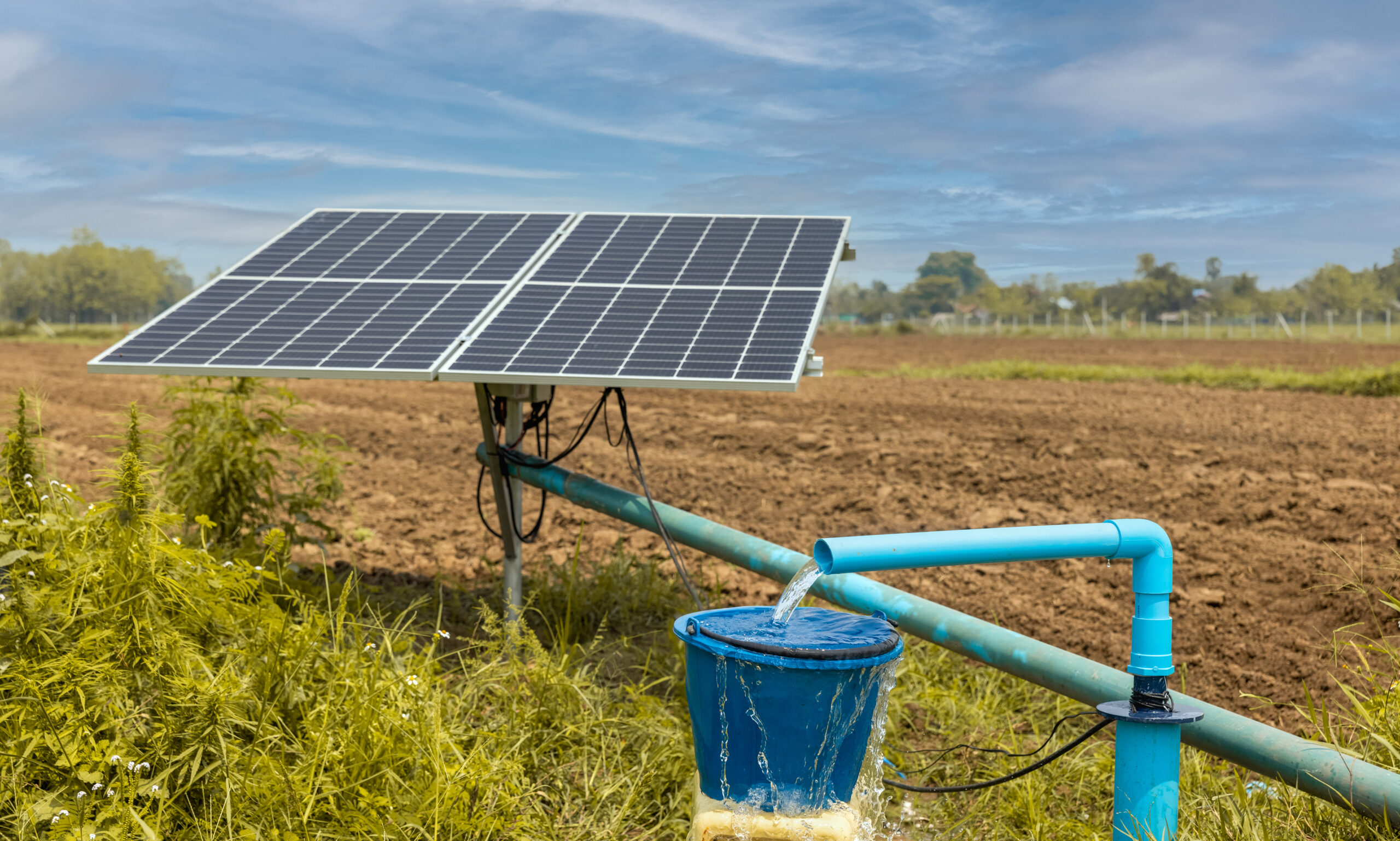
An impactful example is the solar-powered water pump. With the sun as a steady power source, pumps can draw water from boreholes or protected wells throughout the day, ensuring a continuous supply of safe water. Families no longer rely on distant or unsafe sources, and women and girls regain hours of time each week, time that can be redirected toward schooling, economic activities, or community participation.
Similarly, small-scale solar irrigation systems allow farmers to irrigate fields more regularly, extend growing seasons, and stabilize harvests. This strengthens food security, improves livestock care, and enables farmers to sell surplus produce at local markets, directly increasing household income.
When water pumps and irrigation systems are powered by clean, reliable energy, their benefits multiply: improved health, reduced labour burdens, stronger local economies, and new opportunities for income generation. Approaching water and energy as a nexus – two challenges best solved together – creates a pathway toward economic and social empowerment.
CEI Africa’s Smart Outcomes Fund (SOF) builds on this nexus approach.
By incentivizing companies that distribute solar-powered pumps, stand-alone irrigation systems, water treatment and purification solutions, and other productive use of energy (PUE) technologies, CEI Africa helps ensure that clean energy (SDG 7) contributes directly to progress across multiple goals: safe and sustainable water access (SDG 6), gender equality (SDG 5), economic empowerment and decent work (SDG 8), and improved community wellbeing and resilience.
UNICEF (2025): Progress on household drinking water, sanitation and hygiene – https://www.unicef.org/wca/press-releases/africa-drastically-accelerate-progress-water-sanitation-and-hygiene-report?utm_source=chatgpt.com